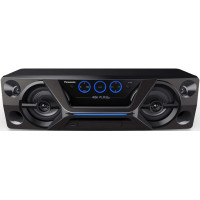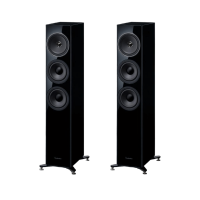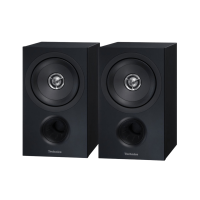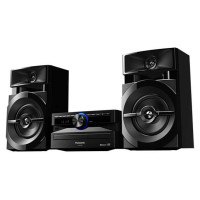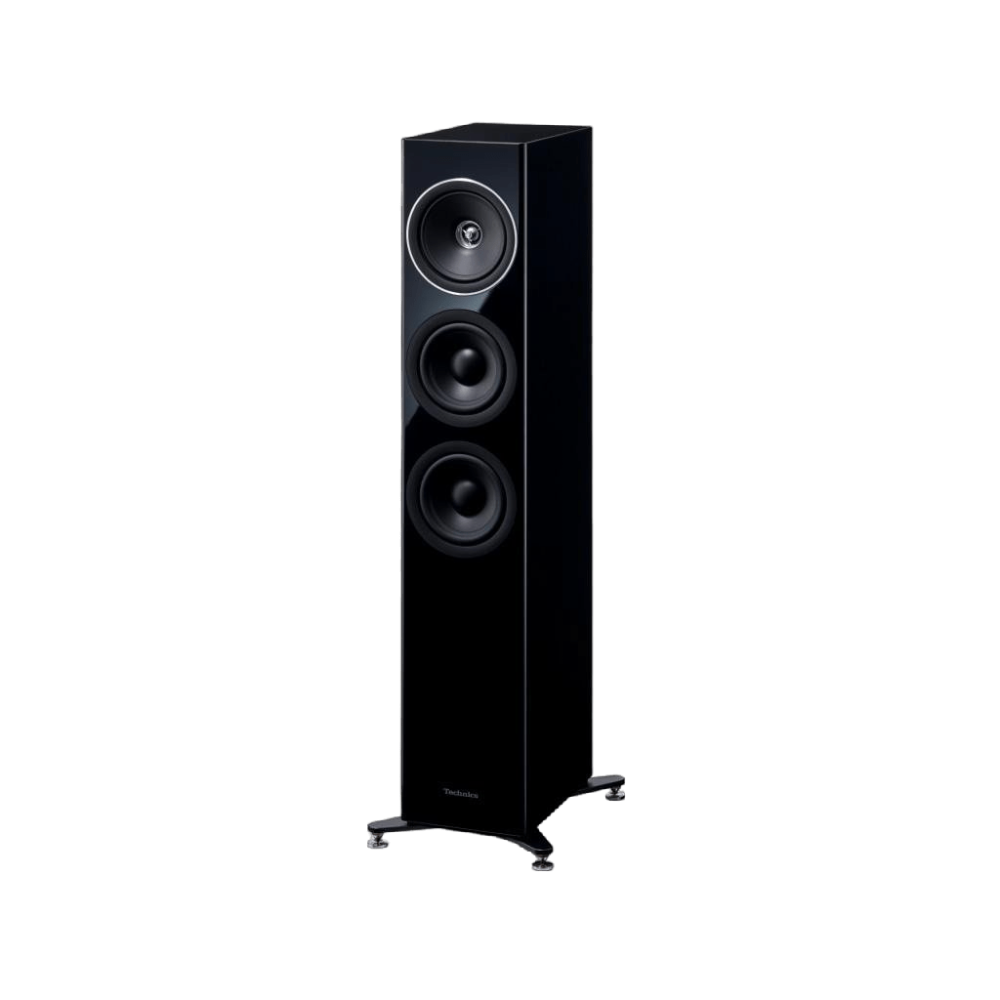
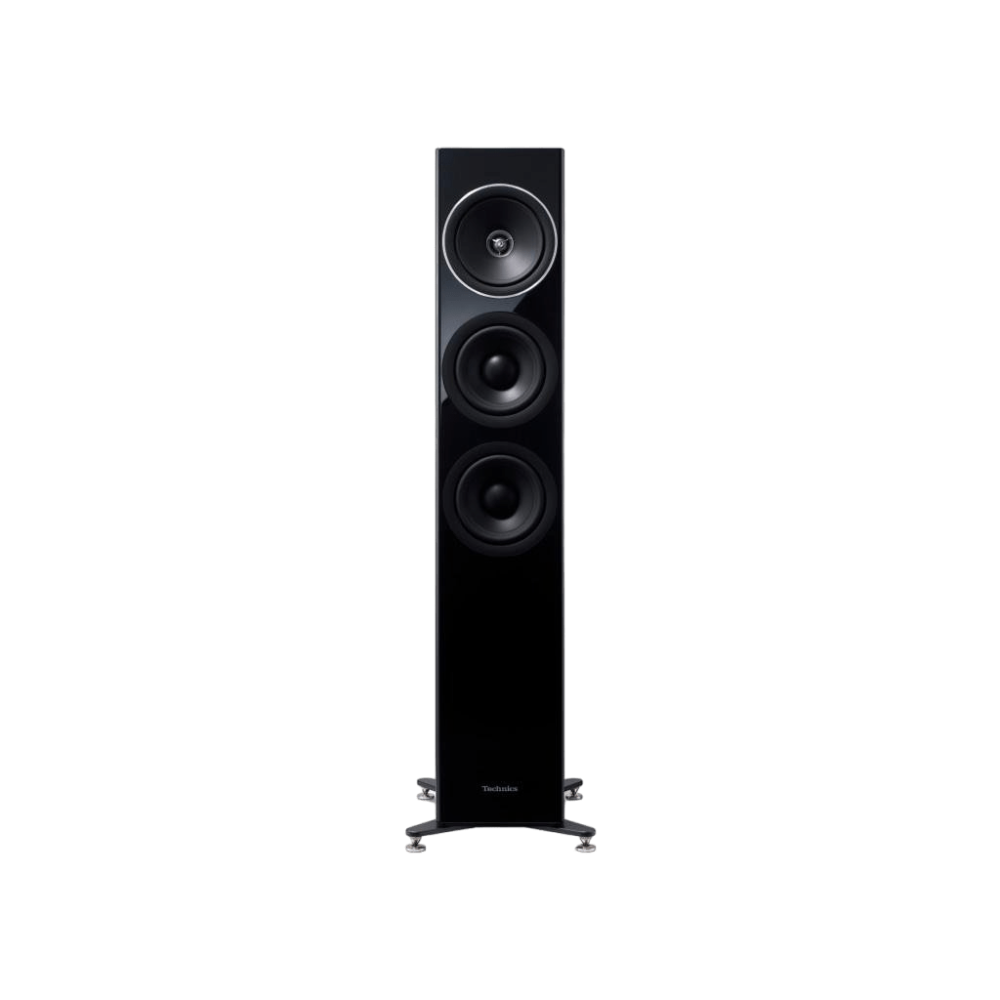

Grand Class speaker system SB-G90M2
For immersive surround music playback, it is essential that sound waves from each speaker arrive in phase at the listener’s position, regardless of where they are seated. A point-source sound concept is one of the most effective ways to achieve this precise coherence.
Advanced Phase Precision Driver

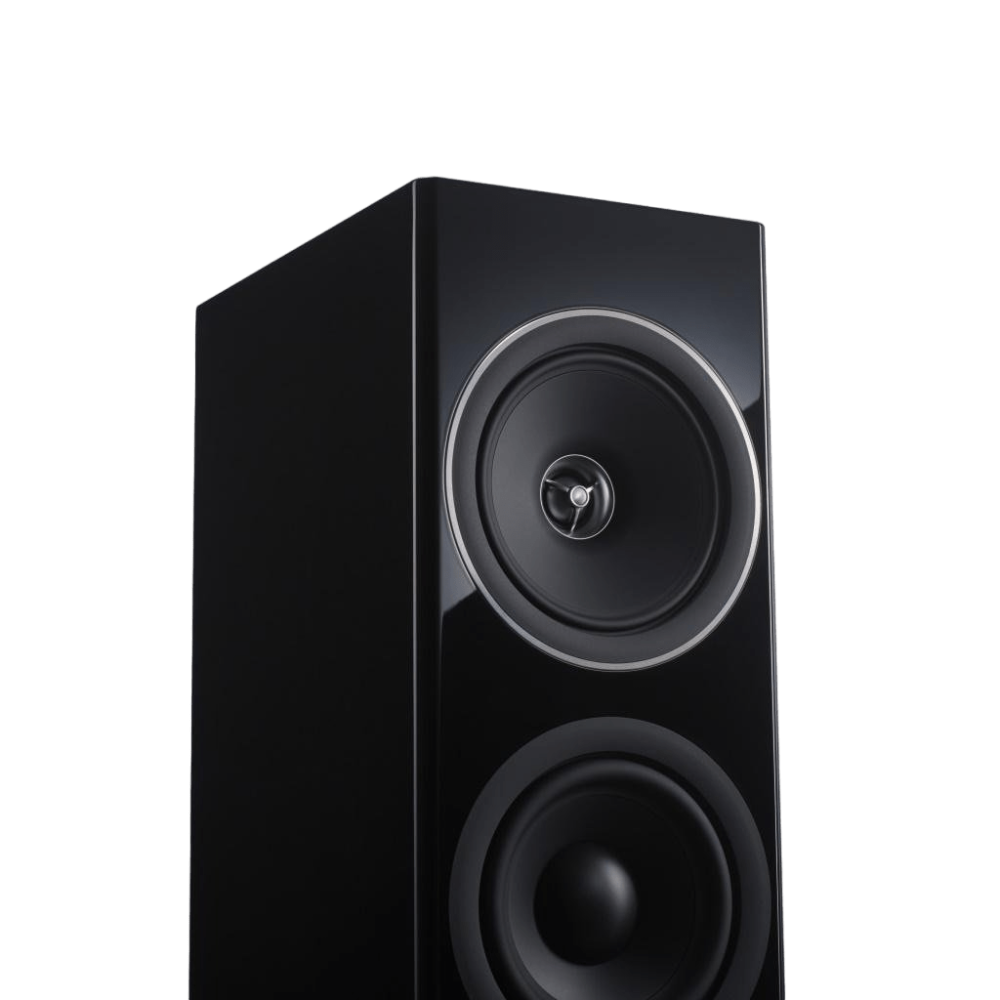
A coaxial driver layout is employed to approximate point-source sound radiation, further enhanced by a specially engineered phase-aligning bullet and a free-floating diaphragm that work together to minimize internal reflections.
The SB-G90M2 two-way driver unit is purpose-built for accurate mid- and high-frequency reproduction, enabling precise imaging and open, expressive sound. At the same time, it upholds the point-source and linear-phase design philosophy that Technics has consistently refined.
Linear Phase Plug

A carefully contoured phase equalizer is positioned in front of the tweeter diaphragm, ensuring high-resolution reproduction and creating a spacious, expansive sound field.
The modular phase-equalizing “bullet” is crafted from solid brass, giving it high density and stability. This construction suppresses excess vibration induced by the midrange unit, delivering clear sound with very low distortion.
Smooth Flow Diaphragm

As sound travels along physical surfaces, irregularities can create interference that degrades the frequency response, especially at high frequencies where wavelengths are short. To counter this, the midrange cone of the coaxial driver uses a flat profile with free-floating edges, reducing coloration and suppressing unwanted noise from the diaphragm. The result is excellent frequency and phase characteristics, broad dispersion, and a wide, stable soundstage with rich midrange and detailed treble.
Stationary Construction
Achieving music reproduction with a high signal-to-noise ratio requires the elimination of all sources of unwanted resonance. Building on the SB-G90, the SB-G90M2 employs a further refined driver-mounting system developed through computer-based analysis to ensure extremely secure, stable mounting. At the same time, the overall cabinet rigidity has been increased to fully exploit the advantages of the balanced driver layout. Each component of the coaxial driver has been structurally analyzed for strength and geometry to minimize vibration and spurious resonances. Additional internal elements have been introduced to create a dedicated sound path within the enclosure.
This innovative internal architecture significantly attenuates standing waves responsible for resonant peaks.
Balanced Driver Mounting Architecture

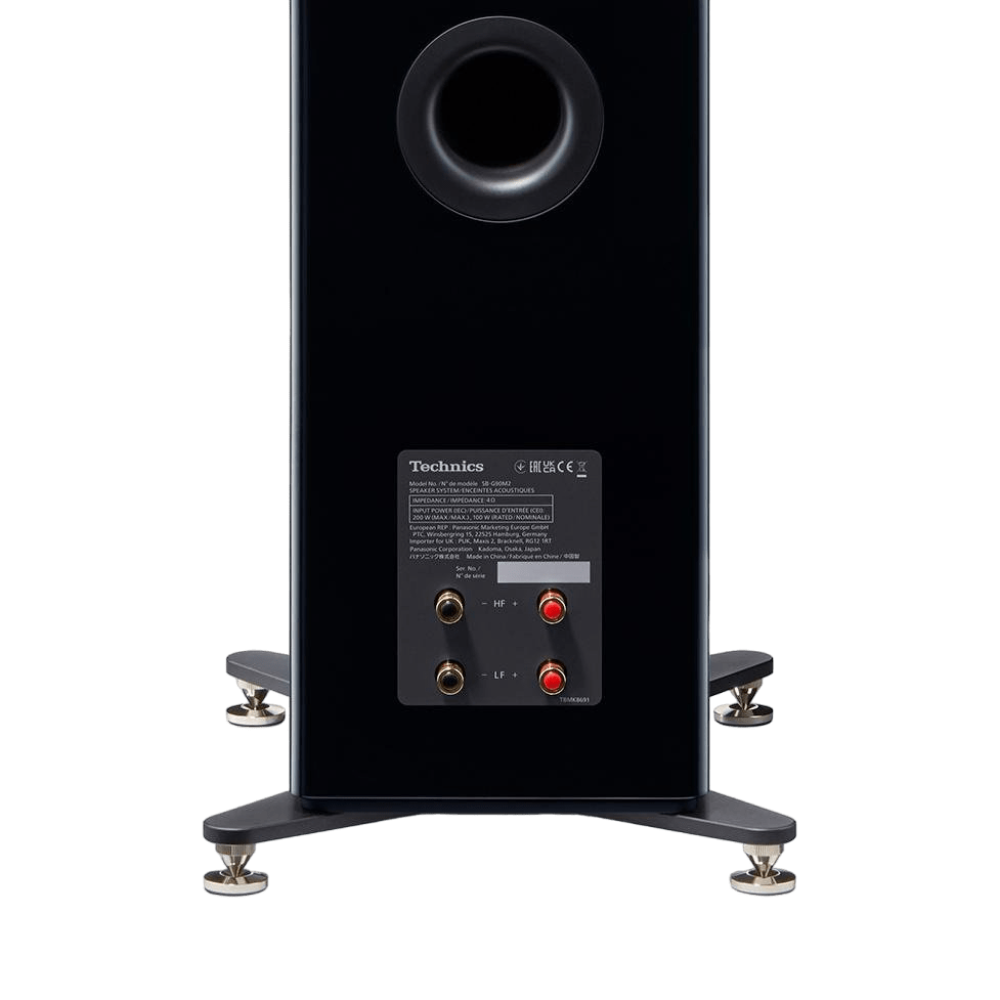
Unwanted vibrations transmitted to the baffle are further reduced by optimizing the air vents using advanced computer simulations. This allows the woofer baffle to be rigidly coupled to the bottom panel, greatly increasing structural integrity. The refined vent design also improves the propagation of reflected sound along the cabinet sides, extending the overall frequency response. Furthermore, the baffle supporting the coaxial driver is physically separated from the baffle holding the woofer to prevent mechanical interaction between them. Combined, these measures enhance clarity, transparency, and three-dimensional imaging.
Standing Wave Termination Structure

Standing waves inside a loudspeaker enclosure create resonances at particular frequencies defined by the cabinet’s internal dimensions. The conventional way to counteract this is to fill the interior with damping material. However, such material can absorb not only the problem frequencies, but also desirable information, sometimes dulling dynamics and reducing realism. As a more precise solution, the lower section of the woofer chamber incorporates a dedicated sound-path structure that guides and terminates standing waves responsible for resonance peaks, while using only a minimal amount of absorptive material. (Patented) This approach allows highly accurate music reproduction, with natural, lifelike sound particularly in the mid- and high-frequency bands.